The AI Era: Three Internal Battles Enterprises Are Losing
Author:
Alp Erguney
Updated:
June 8, 2026
The New Enterprise Reality
Artificial intelligence is fundamentally shifting the competitive landscape. Historically, large corporations could rely on their size, capital, and legacy scale as a protective moat against competitors. Today, that is no longer the case. AI has democratised speed and efficiency, allowing smaller, nimbler organisations to place crushing pressure on industry giants.
To illustrate this shift, look at the recent high-profile example from May 2026, when Long Lake Management acquired Amex Global Business Travel for $6.3 billion. A tech-investment firm did not buy the world's largest corporate travel platform just to own a massive legacy company. They bought it to force-multiply it with their proprietary Nexus AI platform.
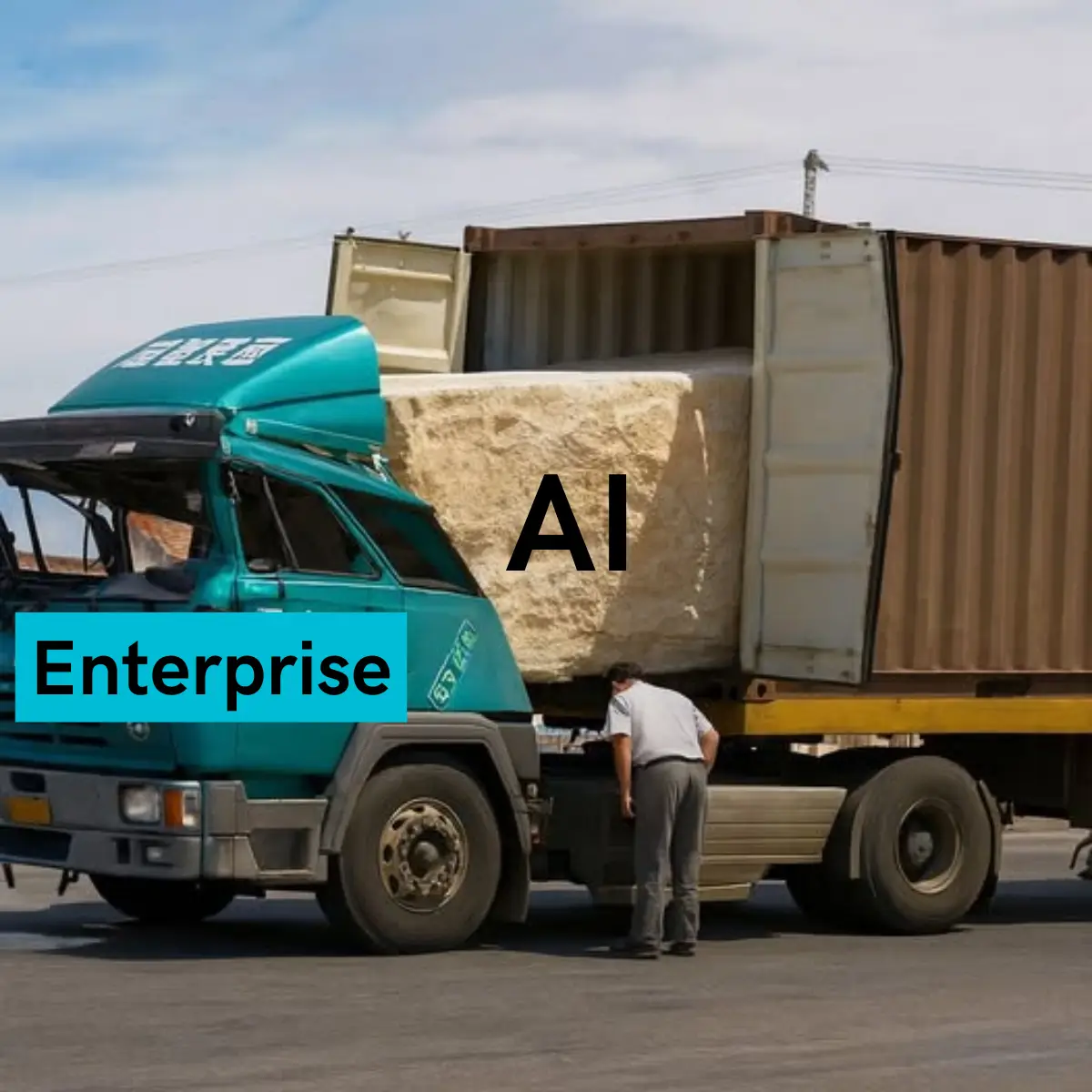
Enterprise moat is no longer about legacy scale. The true competitive advantage now lies in your ability to remain lean despite your size and ship value at neck-breaking speeds. As AI boosts prototyping, code generation, and tedious operational tasks like never before, it's laying the groundwork for the survival of the fittest rather than the oldest and biggest.
Challenge 1: Fragmented Work and Contaminated Data
Challenge 2: Incentives and Internal Competition
Incentives and internal competition is the root cause of fragmented work and contaminated data. KPIs that fail to measure performance with a broader context and perspective.
The Solution: Defining value and establishing operational visibility is the starting point. Knowing what creates willingness to pay and seeing what stands in its way is the biggest revelation that is easily overlooked.
Challenge 3: Organisational Design
The line between "the business" and "IT" are blurring, pushing the existing rigid structures away from their comfort zones.
Wrapping Up
What are your organisational objectives? How is your organisation incentivised? Are they creating collective motivation, or boosting individualism?
If these questions yield different results based on who is answering them, your organisation might be running out of time. Improving and adapting are table stakes to weather the storm of innovation.
Take a look at the Actionable Strategy Workshop template to reframe your competitive advantage, customer satisfaction drivers, and the market dynamics. Reach out if you are keen to future-proof your business. I offer free discovery sessions to form lasting partnerships. No binding contracts, just a candid conversation on how to overcome organisational hurdles.